FDA Experts Urge Risk Based Controls and Seek and Destroy Tactics to Fight Listeria

Updated: 5 days ago
Listeria Control: A Comprehensive Guide for Food Manufacturers
Listeria control is challenging because the organism does not behave like a one-time contamination event. Listeria monocytogenes can settle into food processing environments, survive cold conditions, and reappear after cleaning if a facility provides it with the right places to hide.
That was the central concern raised during a two-day meeting held by the FDA, where experts discussed practical ways to reduce listeriosis risk. The message was not that the food industry needs a new slogan or a single tougher rule. The message was more basic and more demanding: facilities need strong preventive controls, hygienic equipment and building design, tighter moisture and temperature management, and environmental monitoring programs that identify problems before finished food reaches consumers.
The debate also touched on zero-tolerance policies. While no one wants Listeria monocytogenes in ready-to-eat foods, experts questioned whether a rigid test-and-punish mindset can miss the bigger goal. A more realistic approach asks facilities to actively hunt for the organism in the environment, find its niches, and remove them. That is the logic behind the seek-and-destroy model.

Listeria Control Starts with Prevention, Not Reaction
Listeriosis is rare compared with many foodborne illnesses, but it is serious. It can cause severe disease, especially in pregnant people, older adults, newborns, and people with weakened immune systems. That makes control of Listeria monocytogenes especially important in ready-to-eat foods, where consumers may not apply a kill step before eating.
Foods of Concern
Foods that often draw concern include:
Soft cheeses and other dairy products
Deli meats and prepared salads
Smoked seafood
Refrigerated ready-to-eat meals
Fresh-cut produce handled in wet environments
The problem is not limited to one category. Any operation that handles ready-to-eat foods in cool, moist spaces can face risk if sanitation, traffic patterns, equipment design, or maintenance allow the organism to persist.
A reaction-based program waits for a positive product test, a complaint, or an outbreak signal. By that point, the facility may already have shipped food. A prevention-based program looks for conditions that allow Listeria to survive and spread.
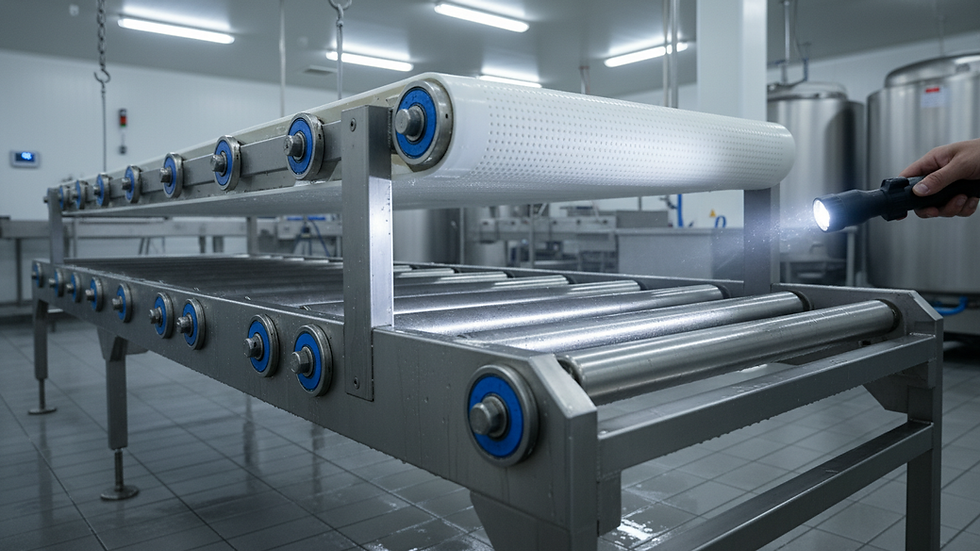
That shift matters. Product testing can confirm a problem, but it cannot prove a facility is safe by itself. Sampling a small amount of product from a large production lot can miss contamination that occurs in pockets. Environmental monitoring gives a broader view. It can show whether the organism is living in drains, under equipment, inside hollow rollers, near floors, or in other non-food-contact areas that can become a source of future contamination.
Daily Preventive Control Questions
Preventive control also means asking practical questions every day:
Where does water collect after sanitation?
Which parts of the line are hardest to clean?
Can employees move from raw to ready-to-eat areas without spreading contamination?
Are repairs creating cracks, seams, or rough surfaces?
Does equipment come apart fully enough for inspection?
Are cool rooms cold enough without creating excess condensation?
The FDA meeting highlighted these basic controls because they remain the backbone of listeriosis prevention. Advanced testing helps, but it cannot replace good design, cleaning, maintenance, and verification.
Persistence in Processing Environments is the Central Challenge
Listeria monocytogenes is difficult because it can persist. It does not need ideal conditions to survive. It can tolerate refrigeration temperatures better than many other foodborne pathogens, and it can remain in damp niches that routine cleaning may not reach.
In a processing plant, persistence can develop around predictable trouble spots. Drains are one of the classic examples. They collect water, residues, and microorganisms. If drain cleaning is poor, or if water sprays from drains during sanitation, contamination can move outward.
Common Harborage Areas
Other common harborage areas include:
Cracked floor-wall junctions
Damaged door gaskets
Hollow frames and rollers
Conveyor joints and belt undersides
Condensate drip points
Poorly sealed equipment feet
Hard-to-access slicers, dicers, fillers, and packaging equipment
Once Listeria finds a protected niche, routine sanitation may reduce it without removing it. The organism can then reappear days or weeks later. A facility may see a pattern of intermittent positives and assume each finding is isolated. In reality, the same hidden source may be reseeding the environment.
A single positive environmental sample is not only a failure signal. It can be a map that points toward a harborage site.
That is why the seek-and-destroy approach has gained attention. It treats environmental positives as useful information. The goal is not to avoid looking. The goal is to look in the right places, find the organism, and remove the root cause.
This approach can feel uncomfortable. No facility wants positive results. Yet a monitoring program that never finds anything may be too narrow, too predictable, or too focused on easy-to-clean areas. A strong program samples where Listeria is most likely to survive, including non-food-contact zones that reveal early warning signs.

Hygienic Design Can Make or Break a Control Program
Cleaning is only as effective as the surfaces and equipment allow. If a machine contains hollow spaces, rough welds, dead ends, or parts that cannot be reached, sanitation crews face a losing battle.
Hygienic design reduces the number of places where water, food residue, and microorganisms can collect. It also makes cleaning easier to verify. That matters in high-risk areas where ready-to-eat foods are exposed after cooking, washing, slicing, or other key steps.
Key Features of Good Hygienic Design
Good hygienic design includes several practical features:
Smooth, cleanable surfaces
Sloped areas that drain fully
No unnecessary hollow structures
Sealed seams and welds
Easy tool-free access for cleaning where possible
Separation between raw and ready-to-eat zones
Equipment placement that allows cleaning around and under the line
Materials that do not crack, corrode, or absorb moisture
The FDA discussions pointed to design because many contamination problems are built into facilities long before production begins. A plant may spend large amounts of time and labor cleaning around a poor design instead of removing the design flaw itself.
Repairs deserve the same attention. A temporary fix can create a long-term harborage point. Tape, cracked plastic, exposed insulation, poorly sealed metal patches, and damaged gaskets can all undermine sanitation. Maintenance teams play a direct role in food safety, not a side role.
Judging Design Effectiveness
A useful way to judge design is to watch sanitation in real conditions. If employees need unusual tools, awkward body positions, or excessive time to reach a part, the design may be working against them. If water pools after the cleaning cycle, the area may become a recurring risk. If a part cannot be inspected, the facility cannot know whether it is clean.
Hygienic design is often discussed as an engineering issue. It is also a management issue. Capital planning, purchasing choices, maintenance standards, and production schedules all affect whether sanitation can succeed.
Moisture and Temperature Demand Constant Attention
Cold temperatures slow many microorganisms, but they do not solve the Listeria problem. Listeria monocytogenes can survive and grow at refrigeration temperatures. That makes ready-to-eat refrigerated foods a special concern, especially when shelf life is long enough to allow growth.
Moisture adds another layer of risk. Wet environments help microbes move. Water can carry contamination from floors to wheels, from drains to nearby surfaces, and from condensation points to exposed product areas. High-pressure spraying can spread contamination if used carelessly, especially around drains or dirty areas.
Facilities often need water for cleaning, chilling, washing, and processing. The goal is not to pretend that dry conditions are always possible. The goal is to control where water goes, how long it stays, and whether it contacts high-risk zones.
Key Moisture Controls
Key moisture controls include:
Fixing leaks quickly
Preventing condensation above exposed food
Improving drainage so water does not pool
Avoiding splash from floors and drains
Managing hose use during operation
Separating wet cleaning from exposed ready-to-eat production
Drying equipment and floors where needed before startup
Temperature control also needs more than a number on a cooler display. Facilities need to understand where temperature varies across rooms, racks, and product zones. Door openings, warm product entering a cold room, poor airflow, blocked evaporators, and heavy production loads can all affect real conditions.
The best programs connect moisture and temperature controls to sanitation and environmental monitoring. For example, repeated positives near a cooler entrance may point to traffic flow, condensation, or standing water. A positive near a packaging line may point to a cleaning method, damaged equipment, or air movement from a wetter area.

Zero Tolerance Alone Cannot Carry the System
The debate over zero tolerance is sensitive because the public health goal is clear. Ready-to-eat foods should not contain Listeria monocytogenes. When the organism is found in finished products, companies and regulators must act to protect consumers.
The concern raised by experts is that zero tolerance can shape behavior in unhelpful ways if it becomes the only measure of success. If companies fear any positive result as a sign of total failure, they may design environmental programs that avoid the hardest questions. They may sample the same clean spots again and again. They may focus more on passing a test than learning where the organism could enter the process.
A Risk-Based Approach
A risk-based approach is different. It still treats Listeria monocytogenes seriously. It also asks where the greatest risk exists and what controls will reduce it most.
In a risk-based program, zones matter. Many facilities use a zone concept similar to this:
Zone | Typical area | Why it matters |
Zone 1 | Food-contact surfaces | Positives can signal direct product risk |
Zone 2 | Near food-contact surfaces | Early warning for spread toward product |
Zone 3 | Floors, drains, wheels, and structures in processing rooms | Common places for persistence and transfer |
Zone 4 | Areas outside processing rooms | Helps track traffic and facility-wide movement |
Zone 1 positives require urgent action because food-contact surfaces can directly contaminate product. Zone 2 and Zone 3 findings are also valuable. They can reveal risks before contamination reaches food.
This is where seek-and-destroy tactics fit. A facility does not simply record a positive and move on. It investigates. The team expands sampling around the positive site, reviews sanitation, inspects equipment, checks maintenance history, and looks for water movement or traffic patterns. If the same area tests positive again, the response becomes more aggressive.
Actions to Take
Actions may include:
Taking equipment apart for detailed cleaning
Replacing damaged belts, gaskets, bearings, or rollers
Repairing floors, drains, and seals
Changing sanitation methods
Adjusting employee or equipment traffic
Revising startup checks
Increasing sampling until the area shows control
This approach respects the public health goal while accepting the biological reality. Listeria control is not proven by the absence of findings. It is proven by a facility’s ability to find risk, correct it, and prevent it from returning.
What Food Facilities Can Take from the FDA Discussion
The FDA experts’ message was practical. Reducing listeriosis depends on doing the fundamentals well and verifying that they work. No single policy can replace daily control of the processing environment.
Key Elements of a Strong Listeria Control Program
A strong Listeria control program should include:
Leadership that expects findings
Environmental positives should trigger action, not panic. A mature program treats them as signals.
Sampling plans that match real risk
Programs should include hard-to-clean areas, wet zones, drains, transfer points, and sites near exposed ready-to-eat food.
Sanitation that reaches hidden niches
Cleaning must address the places where the organism can persist, not only visible soil.
Equipment and facility design that supports cleaning
Hygienic design should guide new purchases, repairs, and layout changes.
Moisture control as a daily discipline
Standing water, condensation, and splash can undo strong sanitation work.
Clear corrective actions
Teams need defined steps for investigation, intensified cleaning, resampling, repair, and escalation.
Training across departments
Production, sanitation, maintenance, quality, and management all influence the risk.
The most useful change may be cultural. A facility that wants only negative environmental results can become less curious over time. A facility that wants to understand its environment will sample more intelligently, respond faster, and learn from patterns.
The takeaway from the FDA meeting is direct: fighting Listeria monocytogenes requires more than finished-product testing and strict language on paper. It requires risk-based controls that match how the organism behaves in real facilities.
The strongest programs look for trouble before it reaches food. They control water. They manage cold environments carefully. They buy and maintain equipment that can be cleaned. They sample the places where Listeria is likely to hide. When they find it, they do not stop at cleaning the surface. They search for the source and destroy the niche.
That is the practical path to reducing listeriosis risk: not pretending the organism is easy to eliminate, but building systems that are honest enough to find it and disciplined enough to remove it.


Comments